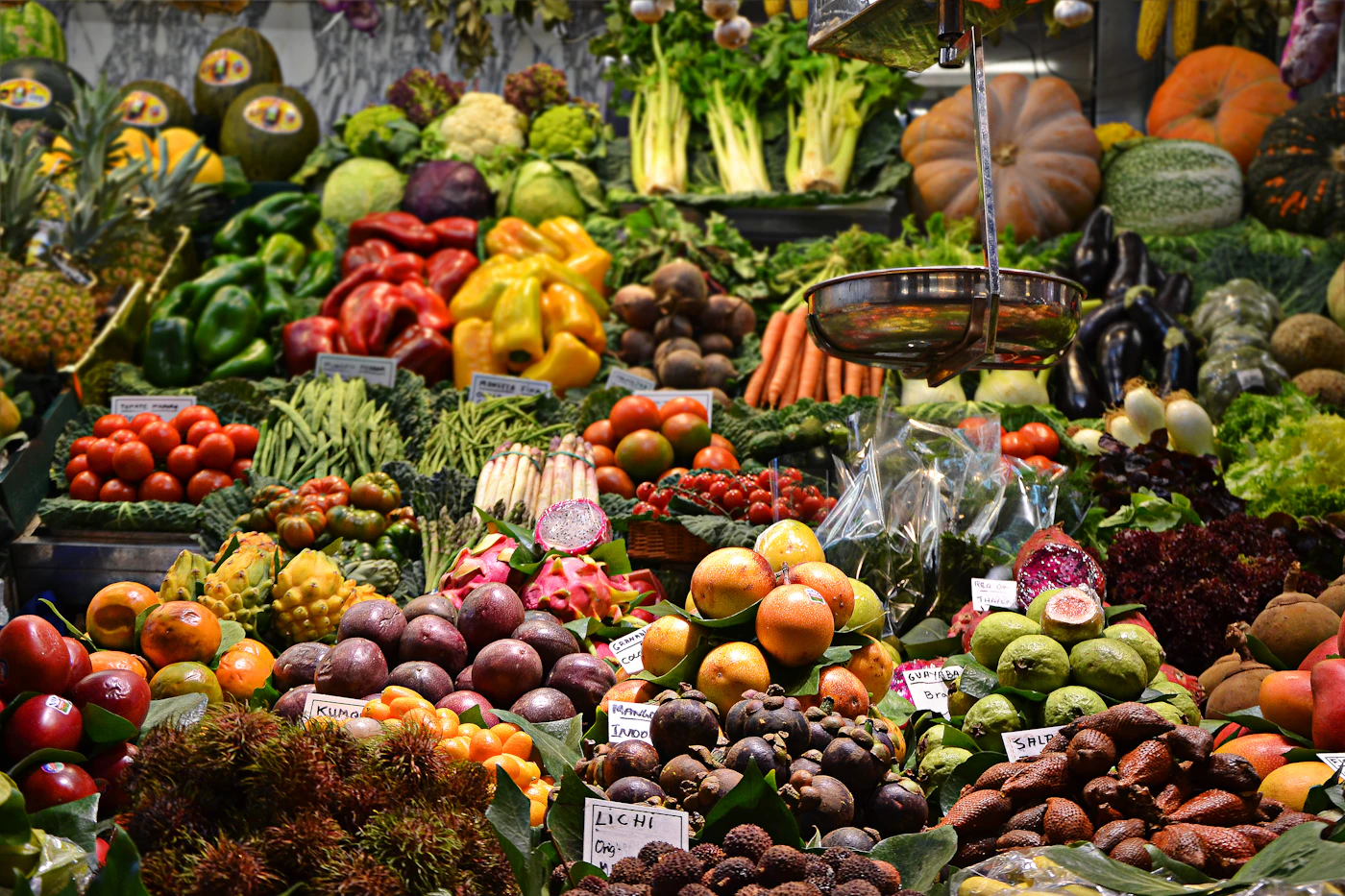
Vegetables, Fruits, Nuts & Grains
The plant kingdom's nutritional gifts and what the USDA data reveals
“I give you every seed-bearing plant on the face of the whole earth and every tree that has fruit with seed in it. They will be yours for food.”— Genesis 1:29
Eat the Rainbow — It's Not Just Pretty
The pigments that give plants their colours are not decorative — they are phytochemicals with specific health-protective functions. Each colour represents different compounds:
- ✦Red (tomatoes, pomegranate) — Lycopene, Anthocyanins
- ✦Orange (carrot, sweet potato) — Beta-carotene, Alpha-carotene
- ✦Yellow-green (broccoli, cabbage) — Sulforaphane, Indoles, Lutein
- ✦Purple (grapes, eggplant) — Resveratrol, Anthocyanins, OPCs
- ✦White (garlic, onion) — Allicin, Quercetin, Selenium
Vegetables: Star Players
| Vegetable | Key Nutrient | Health Benefit |
|---|---|---|
| Carrot | Beta-carotene 8332 mcg, Vit A 17033 IU | Vision, immune function, skin health |
| Tomato | Lycopene 3041 mcg (2× more efficient than carotene) | Prostate cancer protection, cardiovascular |
| Broccoli | Vit C 64.9mg, Vit K 141mcg, Selenium | Anti-cancer, bone health, liver detox |
| Garlic | High Selenium, Allicin | Antimicrobial, anti-cancer, cholesterol-lowering |
| Onion | Quercetin flavonoid | Anti-inflammatory, antioxidant, anti-viral |
| Cabbage | Vit C, Indole-3-carbinol | Hormone balance, cancer prevention |
Fruits: Naturally Low Glycemic Load
One of the most persistent nutrition myths is that diabetics should avoid fruit. The glycemic load data tells a different story — every common fruit has a lower glycemic load than plain cooked rice.
| Fruit | Notable Nutrients | GL (per 100g) |
|---|---|---|
| Grapes (purple) | Resveratrol, Pterostilbene, OPCs | 9 |
| Orange | Vitamin C, Hesperidin, Folate | 5 |
| Papaya | Vit C 61.8mg, Vit A 1094 IU, Papain | 4 |
| Mango | Beta-carotene, Vit C, Vit B6 | 10 |
| Pomegranate | Ellagic acid, Punicalagin | 6 |
| Plain cooked rice (comparison) | Mostly starch | 25 |
Nuts: Nutrient Density in Miniature
Nuts are calorie-dense but micronutrient-rich. A small daily portion provides fatty acids, minerals, and protein that are otherwise hard to obtain:
| Nut | Standout Nutrient | RDA Coverage (10g serving) |
|---|---|---|
| Almond | Vitamin E 26.2mg/100g | 17% Vit E, 2.6% Ca |
| Cashew | Magnesium 292mg/100g | 7% Mg, 2% Se |
| Coconut (raw) | Lauric acid (MCT) | Antimicrobial, quick energy |
| Peanut | High protein, niacin | Caution: aflatoxin risk if improperly stored |
Grains: Far Less Than You Think
Grains are not the nutritional foundation they are made out to be. Data from USDA shows that for a 50kg person on a balanced diet, the required grain intake is far below what most people consume daily.
- ✦Rice and corn: high in carbohydrates but relatively low in vitamins and minerals
- ✦Oats, Bengal gram, Black gram: significantly richer in protein, fat, and minerals
- ✦Wheat: moderate glycemic load; far better than plain rice
- ✦Reducing grain intake and increasing vegetables, fish, eggs, and dairy produces a more complete nutrient profile
“I give you every seed-bearing plant on the face of the whole earth and every tree that has fruit with seed in it. They will be yours for food.”— Genesis 1:29